
2026-09-14 ·
Addressing Musty Odors in Finished Basements After Flooding
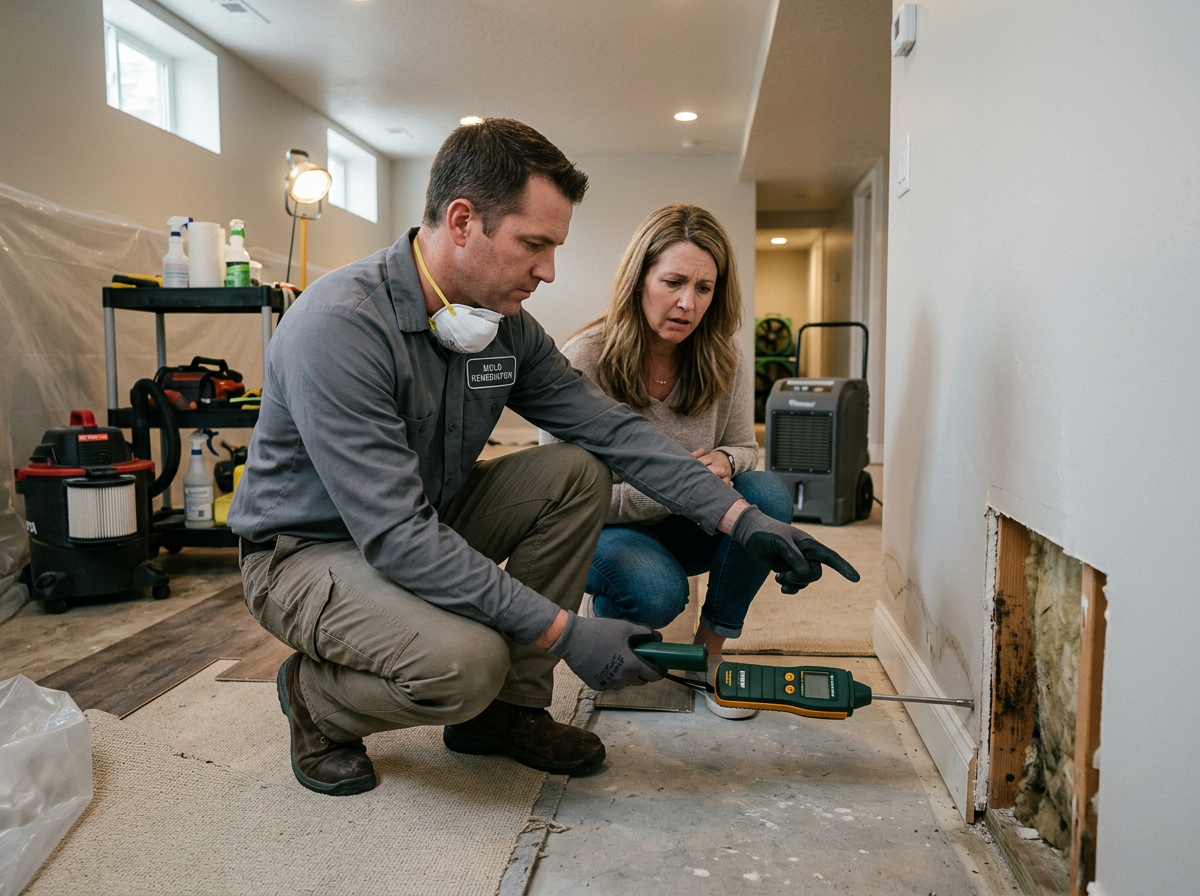
Musty odors in finished basements after flooding signal trapped moisture that standard drying overlooked, with mold growth possible in as little as 48 hours once indoor humidity climbs above 60 percent. In Utah's arid conditions, water from burst supply lines, ice dams, or appliance failures often migrates under slab foundations common in Springville and surrounding areas, staying hidden until odors appear. Finished basements on slab hide slow leaks especially well because concrete retains moisture and finished surfaces block airflow. Winter over-humidification or summer swamp cooler leaks compound the problem by raising ambient moisture levels against cold exterior walls during inversions.
Tracing Hidden Leaks in Slab Foundations
Floodwater in Utah basements frequently enters through mechanical failures such as frozen pipes at 32 degrees Fahrenheit or leaking water heater hoses. Once water reaches the slab, it travels laterally under finished flooring and behind lower wall sections. Homeowners can check for soft spots in carpet or baseboards and use a moisture meter on drywall at floor level to locate elevated readings. Removing base trim reveals whether water wicked upward from the slab edge. In many 1980s and later Springville builds, vapor barriers under slabs were minimal, allowing prolonged dampness. Professional inspection with thermal imaging helps map the full extent without demolition. Basement mold removal focuses on these hidden paths rather than surface cleaning alone.
Correcting the leak source comes first. A roof leak or undrained swamp cooler line left over winter can re-wet the same area months later. Inspect supply lines for corrosion and consider adding R-3 pipe insulation in unconditioned spaces to reduce freeze risk. Finished basements often lack access points, so small core samples or strategic openings may be needed to confirm saturation depth. Without this step, any drying effort fails because the water source remains active.
Drying and Dehumidification Practices
After locating the moisture, remove wet materials and apply air movers plus dehumidifiers sized for the space volume. Target indoor relative humidity below 50 percent during the drying phase, especially when outdoor inversion layers trap moist air. In Utah's dry climate, evaporative drying works faster once bulk water is extracted, but finished surfaces slow the process. Run equipment continuously for several days while monitoring moisture readings at multiple depths in the slab and framing. Avoid sealing the space too soon, as trapped vapor will migrate back into living areas and create the musty smell again.
Homeowners can support drying by increasing ventilation when outdoor dew points are low and using fans to move air across wet surfaces. Check behind electrical outlets and along exterior walls where condensation from temperature differentials adds to the load. If carpet padding remains damp after 72 hours, replacement is usually required because it holds water against the slab. Document moisture levels daily to confirm progress before reinstalling finishes.
Preventing Recurrence Through Source Correction
Long-term odor control requires fixing the original water entry point and maintaining balanced humidity year-round. Install or upgrade sump systems if groundwater contributes during heavy spring runoff near Utah Lake. Seal slab cracks and improve grading around the foundation to direct water away. In tight Utah homes, balanced ventilation prevents winter humidity buildup that condenses on cold walls. Water damage and moisture control services address these mechanical and envelope issues directly.
Review related guidance on similar properties in the region through mold remediation steps for rental properties in Utah County. Regular checks of appliance hoses, roof flashings, and swamp cooler drains reduce repeat flooding events. When odors persist after homeowner drying attempts, further investigation prevents the cycle from repeating each season.