
2026-09-14 ·
Mold in Kitchens and Bathrooms of 1980s Springville Builds
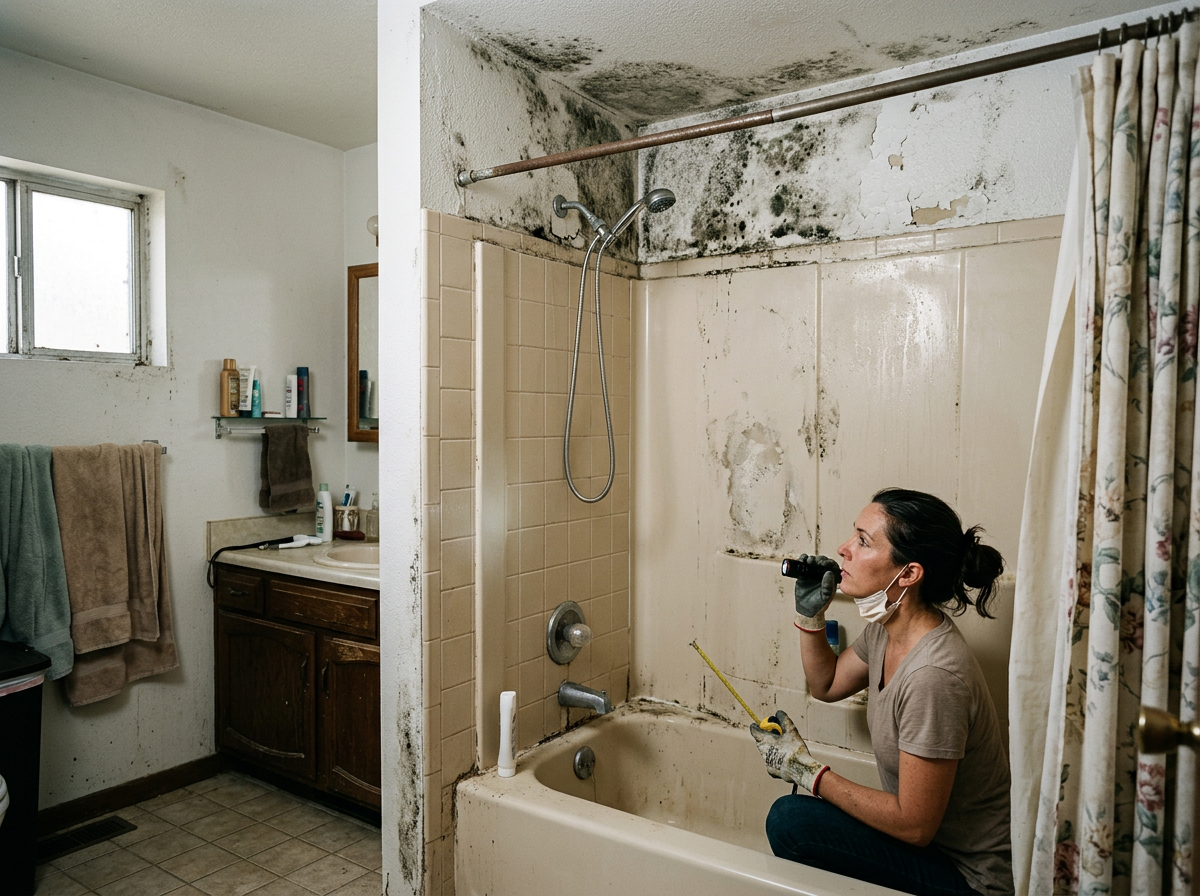
In 1980s Springville builds, mold appears in kitchens and bathrooms mainly from leaking dishwasher hoses, refrigerator lines, and bathroom supply valves that crack after 15 to 25 years of service. Growth begins once moisture sits on drywall or under cabinets for 24 to 48 hours. These homes often feature slab-on-grade construction with finished basements and limited access points behind vanities and toe-kicks, allowing small drips to stay hidden until staining shows.
Common Leak Points in 1980s Kitchens
Kitchens in these homes typically route copper or polybutylene supply lines to sinks, dishwashers, and ice makers. Over time, the lines develop pinhole leaks at elbows or where they pass through cabinets. Refrigerator water lines tucked behind the unit often freeze in winter when indoor temperatures drop near exterior walls, then thaw and drip onto subflooring. Swamp coolers left connected year-round add another moisture source when drain pans clog and overflow during summer use. Once water reaches particleboard cabinet bases or vinyl flooring seams, mold colonies establish along the edges within days. Checking shut-off valves annually and replacing rubber hoses every eight to ten years reduces these entry points.
Bathroom Plumbing Issues in Springville Homes
Bathrooms in 1980s Springville construction frequently use galvanized or early PEX lines that corrode at threaded connections behind tubs and showers. Toilet supply valves crack from repeated on-off cycles, sending water under baseboards. Shower pans without proper slope allow slow seepage into the slab, where it travels laterally under tile. Exhaust fans rated below 50 CFM fail to clear steam during long showers, raising local humidity above 60 percent for hours. This combination creates visible growth along grout lines and behind mirrors. Replacing valves with quarter-turn models and ensuring fan ducts vent fully to the exterior helps limit moisture buildup.
Role of Utah Climate and Home Envelopes
Springville's winter inversions trap moisture inside tight 1980s envelopes, where warm indoor air meets cold exterior walls and condenses on pipes running through exterior cavities. Lines without R-13 insulation freeze when outdoor temperatures fall below 20°F for more than a few hours. Finished basements hide these leaks until carpet or base trim darkens. Summer swamp cooler use can push indoor humidity to 55-65 percent if units lack proper drainage, feeding mold on bathroom ceilings. Addressing only visible growth without fixing the moisture path leads to return growth within one season.
Practical Steps for Source Correction
Start by locating the water event through moisture meters at cabinet backs and base plates rather than relying on visible stains alone. Isolate the leak, remove affected drywall sections at least 12 to 18 inches beyond the damp area, and dry the cavity with dehumidifiers until readings drop below 12 percent moisture content. Improve ventilation by upgrading bath fans to 80 CFM units with humidity sensors and ensuring kitchen range hoods exhaust outside. For homes near Springville, pairing these fixes with periodic checks of appliance connections prevents most recurrences. When growth extends into framing or subfloors, professional mold remediation combined with targeted water damage and moisture control restores the space without repeated cycles. See related guidance on protecting framing in similar mountain-view builds for additional context on long-term prevention.