
2026-09-14 ·
Mold Risks in Garages Attached to Springville Ramblers
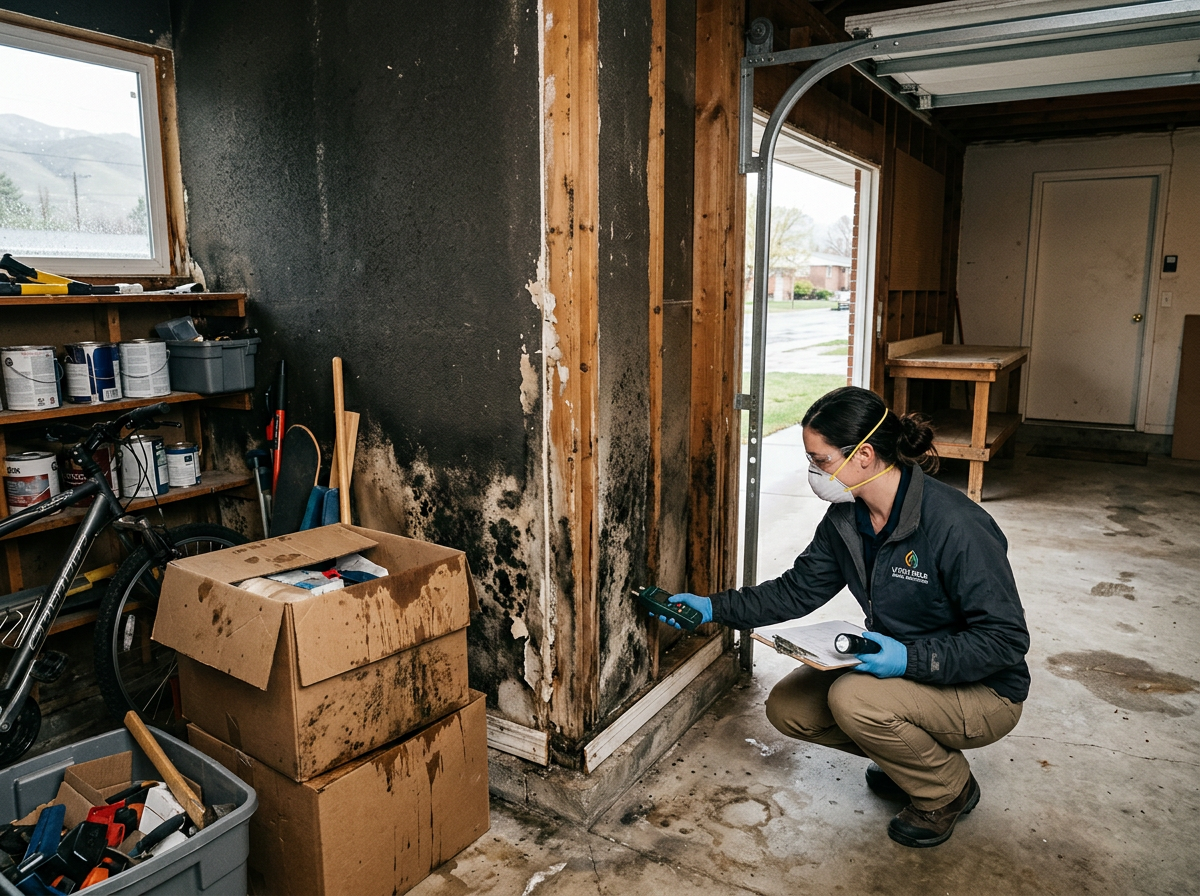
Attached garages on Springville ramblers face elevated mold risks because the shared wall with living areas allows moisture and spores to migrate inward through unsealed penetrations, especially when winter temperatures drop below 20°F and cause supply lines to freeze overnight.
Common Moisture Entry Points in Springville Garages
Springville ramblers often route water heaters, laundry lines, and garage-adjacent hose bibs through the shared wall, creating leak points when pipes freeze or appliance hoses crack. Swamp coolers left undrained in fall add summer moisture that pools on concrete slabs. Ice dams on the low-slope roof sections common to rambler designs send meltwater behind gutters and into the garage ceiling. Finished storage cabinets hide slow drips from roof leaks until drywall softens. Vehicle tires and undercarriages track snow that melts and raises local humidity above 60% for days. Without source correction, cleaning visible growth on walls fails because the next freeze-thaw cycle restarts the cycle. Homeowners in Springville notice musty smells strongest near the interior door after overnight lows reach single digits.
How Attached Walls and Slabs Transfer Moisture
Rambler floor plans place the garage slab directly against the home foundation without a full thermal break, so cold concrete draws condensation from warmer indoor air during inversion events. Uninsulated rim joists above the shared wall allow vapor to pass when indoor humidity climbs from winter over-humidification. Gaps around electrical boxes, dryer vents, and plumbing penetrations act as airflow paths that carry spores into bedrooms and hallways. Once moisture crosses the wall, carpet or baseboard on the living side wicks it upward. Springville’s tight building envelopes trap this humidity rather than venting it, extending drying times beyond 48 hours after a leak. Addressing the garage side first prevents repeated growth cycles that reach finished basements.
Winter Temperature and Condensation Factors
When overnight lows fall below 15°F, uninsulated garage pipes reach freezing within four to six hours, and any resulting drip raises surface moisture on the slab. Daytime highs in the 30s create repeated thaw-freeze cycles that keep relative humidity elevated near the shared wall. Inversion layers trap vehicle exhaust and warm air against the ceiling, promoting condensation on cold exterior sheathing. R-19 batts in walls often leave the top plate and rim area under-insulated, turning those spots into first growth locations. Residents who store firewood or cardboard against the shared wall trap additional moisture against the drywall. These conditions differ from detached garages because the rambler layout keeps the space semi-conditioned through air leakage.
Practical Steps Before Growth Spreads
Inspect the shared wall monthly for soft spots or efflorescence near floor level. Seal penetrations with expanding foam rated for exterior use and add weatherstripping to the interior door. Route condensate lines from any garage-adjacent appliances so they drain visibly rather than into the slab. Keep stored items 6 inches off the floor on plastic shelving to allow airflow. Monitor humidity with a digital gauge placed against the shared wall; sustained readings above 55% warrant further drying. When growth appears on multiple surfaces or returns after cleaning, professional assessment identifies hidden moisture behind cabinets or under the slab. Water damage and moisture control teams locate the mechanical source before removal begins.
When to Involve Local Remediation Specialists
Persistent odors near the garage door or discoloration on the living-side drywall signal that surface cleaning will not stop recurrence. Springville homes built on slabs can hide slow leaks under the garage floor that travel under the shared footing. A targeted inspection checks both sides of the wall and the attic above for connected moisture paths. Mold remediation focuses on removing affected materials and drying the structure rather than repeated treatments. Homeowners also review related guidance in Preventing Attic Condensation During Utah Winters to address roof-level sources that feed garage issues. Early attention keeps growth from reaching finished spaces on the rambler’s single level.