
2026-09-14 ·
Removing Mold From Drywall After Pipe Leaks in Utah County
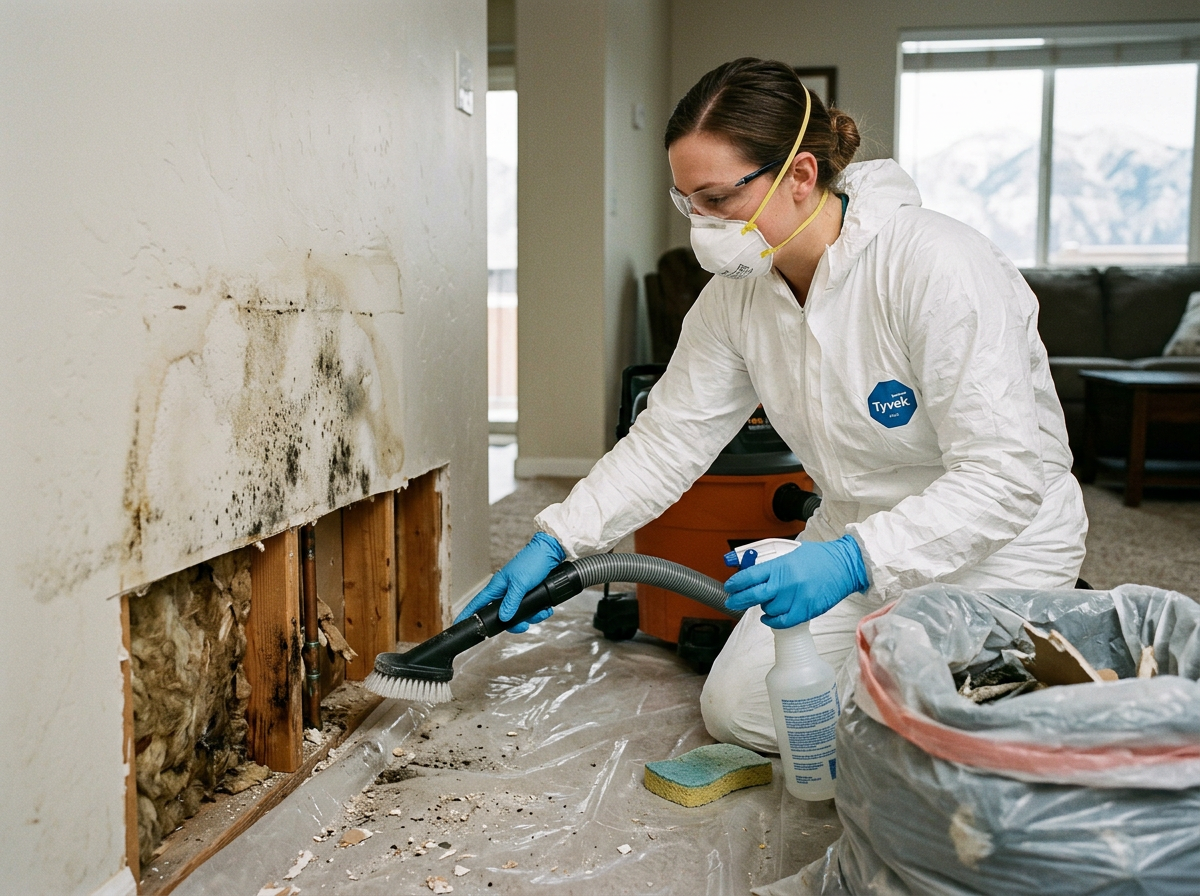
Mold appears on drywall within 24-48 hours after a pipe leak saturates the material in Utah County homes. The first step is always stopping the water at its origin, whether from a burst supply line that froze at 32°F or an undrained swamp cooler, then cutting out the wet sections rather than cleaning the surface alone.
Locating Hidden Leaks Behind Drywall
Utah's arid climate means mold growth almost always traces back to a mechanical failure instead of ambient moisture. Frozen pipes in uninsulated exterior walls during inversion events, leaking appliance hoses, and ice dams on roofs commonly send water into finished basements on slab foundations. Homeowners can check for soft spots by pressing along baseboards and looking for discoloration at seams. Slow leaks behind cabinets or in tight building envelopes often stay invisible until the drywall darkens or a musty odor appears near cold exterior walls. Checking the water heater and supply lines for corrosion helps pinpoint the entry point before any cutting begins.
Cutting Out Contaminated Drywall Sections
Once the leak is fixed, mark a rectangle at least 12 inches beyond any visible staining and use a utility knife to score the paper facing. Remove the section in one piece to limit dust, then inspect the cavity for insulation that may also be wet. In homes with R-13 batts or less, the material behind the drywall frequently holds moisture against the studs. Bag all removed pieces immediately and wipe the exposed framing with a damp cloth to clear loose debris. This process keeps spores from drifting into unaffected rooms during the work.
Drying the Cavity and Framing
After removal, run a dehumidifier set to maintain 50 percent indoor humidity while directing air movers across the studs for several days. Utah's low outdoor humidity helps the process, but winter conditions with closed windows can trap moisture inside the wall cavity. Check moisture levels with a meter until readings drop below 15 percent on the wood. Leaving any damp material allows spores to reactivate quickly when temperatures rise. Homeowners who skip this step often see new growth within weeks even after the original leak is repaired.
Water damage and moisture control services can assist with equipment placement when the affected area is large.
Preventing Future Pipe-Related Mold
Insulate supply lines with at least R-3 foam sleeves in exterior walls and attics to reduce freeze risk during cold snaps. Route condensate lines from swamp coolers so they drain completely at season's end. In Springville homes, periodic checks of roof flashing and appliance connections catch small leaks before they reach drywall. Keeping indoor humidity between 40 and 50 percent year-round limits condensation on cold surfaces. For ongoing issues in Utah County, reviewing related guidance on local cost factors helps plan follow-up work.
Cost factors for mold remediation in Springville homes outlines variables that affect drywall replacement scope after leaks.
When Professional Help Is Needed
Large areas or leaks that have reached multiple rooms benefit from structured removal plans that include containment barriers and negative air machines. Mold remediation teams familiar with Utah County construction can coordinate the drywall work with drying verification. Homeowners should confirm the water source is fully resolved before any new drywall is installed to avoid repeating the cycle.