
2026-09-14 ·
Seasonal Mold Checks Before Selling a House in Springville
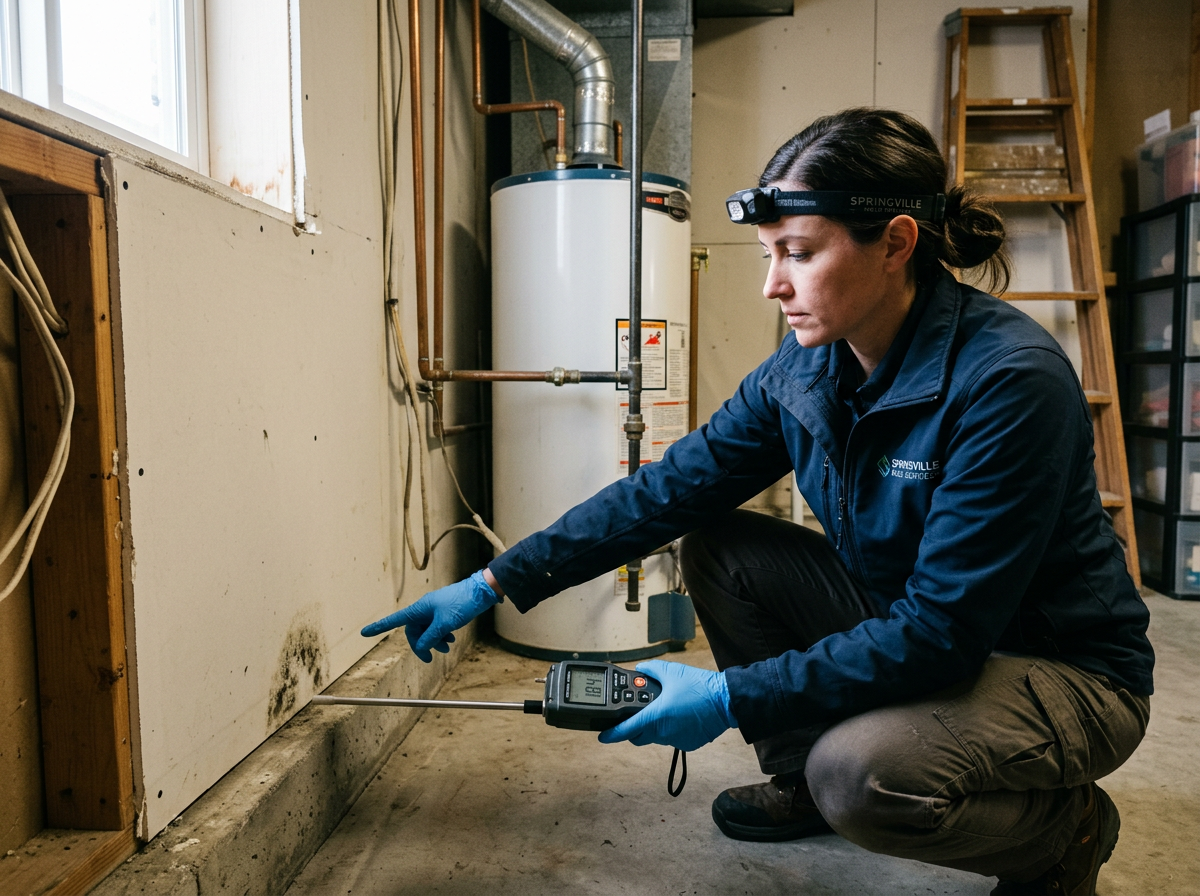
Springville homeowners preparing to sell should run targeted seasonal mold checks in fall and spring, focusing on mechanical water sources that appear after 24-48 hours of undetected leaks. These checks center on pipe insulation, appliance connections, and ventilation gaps that develop during temperature swings between 32°F freezes and summer humidity spikes above 50%. Addressing issues at this stage prevents last-minute negotiations over visible growth in basements or attics.
Winter Pipe and Roof Inspections
Springville winters bring repeated freeze-thaw cycles that stress supply lines and roof penetrations. Sellers should trace all accessible pipes in crawl spaces and attics for insulation gaps, paying special attention to north-facing walls where temperatures drop fastest. Check water heater connections and washing machine hoses for signs of slow seepage that leave behind discolored drywall or warped baseboards. Ice dam formation along eaves often directs meltwater behind siding, so examine second-story exterior walls for staining after the first hard freeze. Document any repairs made during these checks so the disclosure packet shows proactive maintenance rather than ongoing problems.
Summer Swamp Cooler and Humidity Checks
Swamp coolers left undrained through winter or run without proper bleed-off create the exact moisture load that triggers growth in attics and ceiling cavities. Before listing, drain and inspect the unit, then verify that overflow lines route away from the structure. Measure indoor relative humidity in finished rooms during peak cooling hours; readings that stay above 50% for more than a few days point to either poor ventilation or an appliance leak. In Springville’s tight, energy-efficient builds, even small amounts of added moisture from these units can condense on cold exterior walls during inversion events. A walkthrough with a moisture meter at this stage reveals hidden pockets before an appraiser or buyer notices musty odors.
Basement Slab and Finished Space Reviews
Many Springville homes built on slab foundations hide slow leaks under carpet or laminate in finished basements. Sellers should pull back a corner of flooring in lower-level rooms to inspect for darkened concrete or elevated moisture readings along exterior walls. Check sump pump discharge lines and French drain cleanouts for blockages that allow water to back up during spring snowmelt. These areas often stay out of sight during showings, so early confirmation that no active source exists keeps the transaction on schedule. Mold inspection and testing can provide third-party confirmation of conditions without turning the process into a remediation project.
Linking Findings to Sale Documentation
Buyers and their inspectors routinely ask about past moisture events in Utah County homes. Compile dated photos of checked areas along with any corrective steps taken, such as adding R-value pipe wrap or rerouting a swamp cooler drain. This record pairs naturally with disclosures and can reference related resources like documenting mold damage for insurance claims in Utah County if prior water events appear. When growth is found, water damage and moisture control work can be completed and documented before the house goes live, keeping the focus on the property’s condition rather than on surprises during the final walkthrough.