
2026-09-14 ·
Handling Mold Discovered During Springville Home Renovations
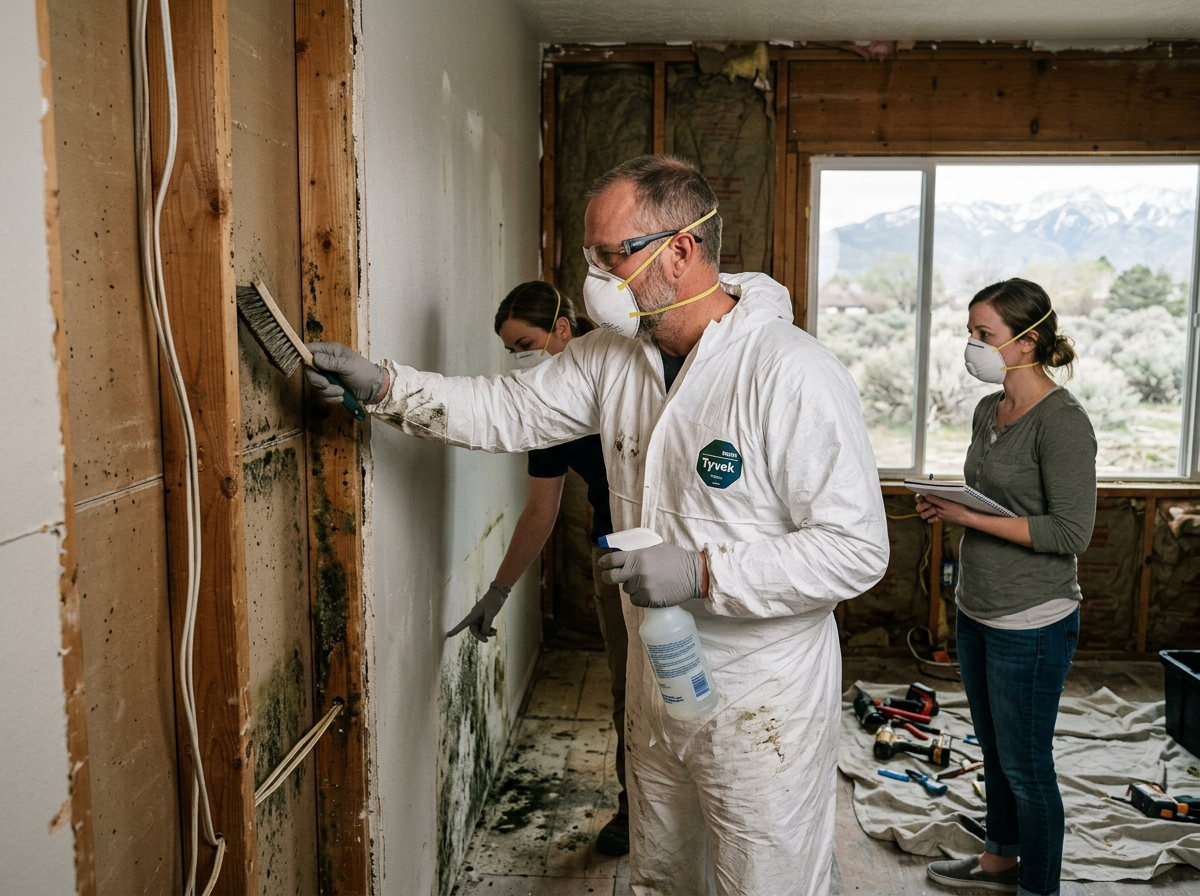
In Springville renovations, mold handling starts by locating and stopping the moisture source—often a burst pipe, leaking water heater, or roof penetration from ice dams—then removing affected materials only after drying is confirmed. This sequence prevents the regrowth that occurs when cleaning alone is attempted in Utah's arid climate where hidden leaks persist behind finished surfaces.
Tracing Moisture Sources Common in Springville Renovations
Springville homes undergoing updates frequently expose issues from winter pipe freezes around 32°F or summer swamp cooler leaks left undrained. Finished basements on slab hide slow drips from appliance hoses, while tight building envelopes allow winter inversion moisture to condense on exterior walls. During demolition, inspect supply lines for prior bursts and check attic insulation for roof leak stains. Addressing these before new drywall installation avoids trapping residual dampness that leads to repeat problems months later. Homeowners can review related foundation moisture patterns in the post How Heavy Summer Storms Affect Foundation Moisture in Springville.
Coordinating Removal with Ongoing Renovation Work
Once the leak is isolated, removal proceeds in phases that align with construction timelines rather than halting progress entirely. Isolate the affected area with plastic sheeting and negative air to keep spores from drifting into clean zones where new flooring or cabinets are staged. Remove porous materials such as insulation and drywall sections beyond visible growth to reach sound substrate, then dry the cavity thoroughly before proceeding with framing changes or electrical updates. This integrated approach keeps the project moving while correcting the underlying condition that allowed growth in the first place. See the dedicated process at Mold Remediation.
Protecting Wood Framing and New Finishes
Exposed framing during renovations offers a direct view of any prior moisture damage along rim joists or bottom plates in Springville basements. Replace sections showing staining or softening, and apply moisture barriers where new finishes will cover the area. In mountain-view style homes with similar envelopes, extra attention to ventilation gaps prevents future condensation on cold surfaces. After repairs, maintain indoor humidity below levels that support growth, especially when adding insulation that can alter airflow. For framing-specific guidance, the article Protecting Wood Framing From Mold in Mountain-View Homes provides further detail.
Verifying Dryness Before Closing Walls
Before new materials seal the space, use moisture meters on remaining wood and concrete to confirm readings have returned to ambient levels typical for the region. This step is essential in Springville where winter over-humidification from sealed homes can reintroduce dampness quickly. Schedule final checks after dehumidification equipment has run, and document the readings for the renovation records. Pairing this verification with water damage corrections listed at Water Damage and Moisture Control reduces the chance of hidden issues surfacing after the project completes.
Local Follow-Up in Springville
Residents can contact Salt Lake Remediation Co at 691 W Spring Creek Pl #250, Springville, UT 84663 for source-specific assessment during active renovation work. The focus remains on correcting mechanical failures common to Utah homes rather than surface treatment alone.